This is insane. Three clean debt-ceiling raises by Republicans under Trump, but here we are:
《The Treasury can’t delay an interest payment without default, according to SIFMA, but it could notify Fedwire by 7:30 a.m. that the payment will not be ready for the morning. It would then have until 4:30 p.m. to make the payment and avoid default.》
@stefan@ak.lightnovel-dungeon.de 🔗 https://ak.lightnovel-dungeon.de/objects/7dd10779-0725-4200-a266-93a90a50c0ec – @funnymonkey I just had a good laugh. allow me a quote: “In addition to the possible business threat, forcing OpenAI to identify its use of copyrighted data would expose the company to potential lawsuits. Generative AI systems like ChatGPT and DALL-E are trained using large amounts of data scraped from the web, much of it copyright protected. When companies disclose these data sources it leaves them open to legal challenges. OpenAI rival Stability AI, for example, is currently being sued by stock image maker Getty Images for using its copyrighted data to train its AI image generator.” So OpenAI likely knows full-well that what it does is unlawful and they try to hide in secrecy so they not get sued, Just lovely.
Utterly fascinating. Document #32, affadavit of Stephen Schwartz, is the most interesting.
Moral of the story: don’t use #ChatGPT to perform your legal (and probably other) research without verifying everything it comes up with through another channel.
#westLaw #nexisLexis legal court documents open access
A special thank you to @andregasser and @bocops for their endless patience and support, and all their hard work on the #BigBone library on which MastodonContentMover depends 🙏》
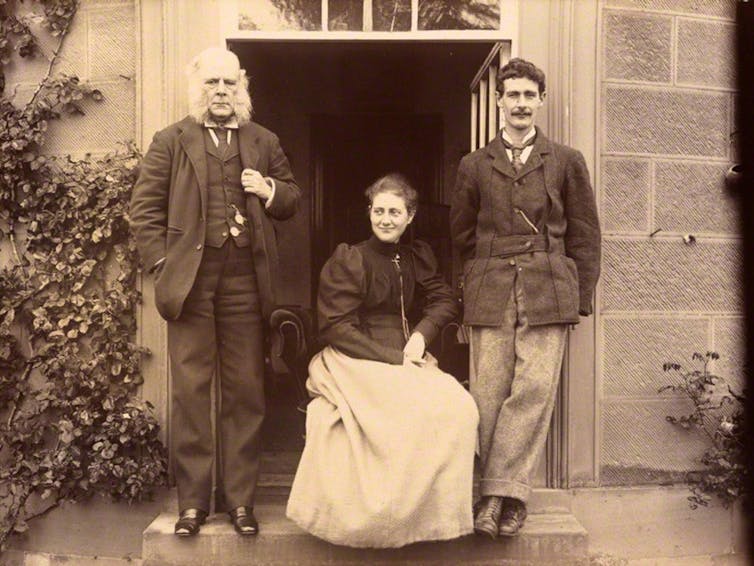
《Potter knew Harris’s Brer Rabbit folktales as a child, having first encountered them in her father Rupert Potter’s library in their grand London home. Copies of the collections Songs and Sayings and its sequel Night with Uncle Remus were found at her farmhouse home in Sawrey in the Lake District after she died in 1943. Each bore her father’s bookplate.
These stories had not been published in the UK when Beatrix Potter was a child. It is therefore likely that her early contact with the Brer Rabbit tales (in comparison with the rest of the British public) was a result of her family roots in the cotton industry.
Her grandfather, Edmund Potter (1802–1883), was a Manchester cotton mill owner and industrialist. He became wealthy in the calico printing business, a cotton cloth originating from India.
Under the British East India Company (1600-1874), the cotton industry was an exploitative one. Cotton was grown by “peasant cultivators” in India who were heavily taxed. At the same time, the growth of demand in Britain and the development of British weaving techniques destroyed the traditional Indian cotton manufacturing industry.
In Manchester, Edmund Potter introduced precision machinery to his calico printing process. By 1883, his mill employed 350 workers – many of them children, according to Lear’s biography – and was the world’s largest calico printing factory.
A great portion of Edmund Potter’s wealth was passed on to Beatrix’s father, Rupert, a lawyer and photographer. He married a wealthy heiress, Helen Leech, whose family had also made a fortune in Manchester’s cotton industry by owning several cotton-spinning mills. By the early 19th century, the raw cotton used in these mills was sourced from the Americas, including from the Sea Islands region and Charleston in South Carolina.
This was the time of Manchester’s emergence as the world’s “cotton capital”. The city’s economic success was deeply connected to the enslavement of African people. Its industry predominantly involved the production of cloth made from raw cotton that had been picked by enslaved people on plantations in the Caribbean and US.
Many of the dyes such as logwood used in the printing of cotton were also imported from places such as Belize (known then as British Honduras) in the British Caribbean, and would have been harvested by enslaved people.
So, was it the Potter family’s connections with the cotton industry, the US, and the slave trade that brought a plantation Brer Rabbit into the Potter household?》
«To us, white supremacy is not just an armed white man with a swastika tattooed on his forehead. It is the 1994 Violent Crime Control and Law Enforcement Act (called by then senator Joe Biden, who drafted the legislation, “Biden’s bill”) juxtaposed with the Anti-drug Abuse Act of 1986 – which together led to the mass incarceration of, principally, Black men. It also explains the enormous sentencing disparity between powder cocaine and cheaper crack cocaine, which was more widely available in poorer and predominantly Black communities. Under the 100-1 crack versus powder cocaine disparity that existed before 2010 (when it was reduced to 18-1), the distribution of just 5g of crack, versus 500g of powder cocaine, carried a minimum five-year federal prison sentence. It also explains the difference in coverage, criminalising and compassion between the “crack epidemic” and the “opioid crisis”.»
 Here, Read This